

Atlanta Fallout, DC Exits, and the Specialist Lateral Rush: What Mattered in Big Law This Week
LEGAL MARKET BRIEF — A regional firm collapse in Atlanta, continued government departures into private practice, and concentrated demand for high-value specialists shaped the week’s recruiting signals

Week in Review — What Mattered
Atlanta loosened fast as Taylor Duma broke apart and rivals harvested talent. Law360
Government exits kept feeding Big Law, especially in Washington-facing practices and counsel slots. Bloomberg Law
Tech markets kept outrunning the pack, with San Francisco, Seattle, and Boston leading partner movement. Law.com

Week Ahead — Watch For
More Atlanta cleanup hiring from firms absorbing stranded books of business.
More DC regulatory and antitrust exits moving into firms or boutiques.
More selective summer hiring as elite firms push back on compressed recruiting.
Continued specialist bidding in New York tax, capital markets, and PE.
Quiet compensation creep in premium laterals before any broad salary move.
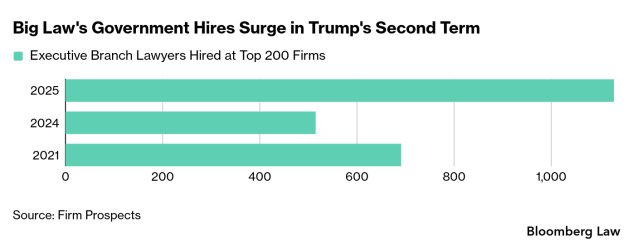
Government-to-firm hiring surged last year, with counsel hiring showing the sharpest jump. Bloomberg Law
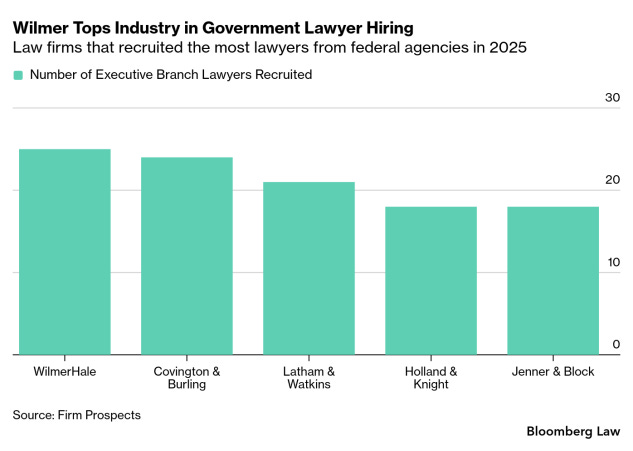
Washington-centric firms are still the cleanest buyers of government talent. Bloomberg Law
Top 5 Moves of the Day
1) Taylor Duma breaks apart in Atlanta
Atlanta-based Taylor Duma shut down this week, and the market moved immediately to absorb lawyers, with Offit Kurman, Smith Gambrell, and Ardis Law all picking up lawyers from the collapse. Law360
Why This Matters to Us: Atlanta just produced real recruiter leverage. When a regional firm breaks, portable books, service partners, and unsettled senior associates all become reachable at once. The leverage sits with fast-moving firms and fast-moving recruiters, not with the displaced platform. Law360
Recruiter Action: Do
Risk Type: Instability
2) Vaca Daffan is the visible edge of a larger government-exit wave
Reuters reported that former senior FTC lawyers Monica Vaca and Kati Daffan launched Washington, DC-based Vaca Daffan, while Bloomberg found the 200 largest firms hired more than 1,100 attorneys from federal agencies and the White House last year, with counsel hiring tripling and partner hiring doubling year over year. Reuters Bloomberg Law
Why This Matters to Us: This is still a buyer’s market for firms in DC-facing practices, but not for every former government lawyer. Firms want usable regulatory credibility, agency relationships, and clean practice fit. The leverage sits with firms that can monetize former regulators without immediately diluting partner economics. Bloomberg Law
Recruiter Action: Do
Risk Type: Expansion
3) Goodwin, McGuireWoods, and Clifford Chance keep buying specialist depth
Goodwin rehired a former Wilson Sonsini M&A co-head in San Francisco, McGuireWoods added two New York SPAC specialists from Loeb & Loeb, and Clifford Chance hired a former White & Case tax partner in New York. Law360 Law360 Law360
Why This Matters to Us: The market is still paying for narrow, monetizable skill sets. Generic lateral chatter is not where the action is. High-value recruiting lanes right now are platform-enhancing specialties: M&A, PE-adjacent capital markets, and tax. The leverage sits with proven specialists and firms willing to buy precision over volume. Law360 Law360
Recruiter Action: Do
Risk Type: Competition
4) Tech hotbeds are still outrunning legacy markets
Law.com reported that San Francisco, Seattle, and Boston posted faster partner movement in 2025, with firms hiring more aggressively where generative AI and GLP-1 related industry demand is real; corporate and litigation moved faster, while specialty practices slowed. Law.com
Why This Matters to Us: Recruiters should stop treating all major markets as interchangeable. Capital is concentrating in markets with real industry tailwinds. The leverage sits in tech-adjacent and innovation-linked practices, and the recruiters who map those ecosystems early will win the year. Law.com
Recruiter Action: Do
Risk Type: Expansion
5) Susman Godfrey slows the campus race
Susman Godfrey said it will wait for full first-year transcripts before reviewing summer associate candidates, pushing back against the accelerated direct-hire model. That lines up with NALP’s finding that average 2L summer class size fell to eight per office in 2025, the smallest since 2020, even as 80% of offers came through employer-sponsored recruiting and 85% were made before July. Bloomberg Law NALP
Why This Matters to Us: Early talent is not opening up; it is getting more compressed and more selective. Firms may still move fast, but they are not necessarily moving broader. The leverage sits with firms that know exactly what profile they want and with recruiters who stay close to summer-class conversion patterns. Bloomberg Law NALP
Recruiter Action: Prepare
Risk Type: Cooling
Regional Lateral Heat Map
Northeast
New York remains active in specialist lanes: McGuireWoods bought SPAC depth and Clifford Chance added tax capability. Law360 Law360
Boston remains one of the faster partner-movement markets where AI and life sciences demand is translating into lateral activity. Law.com
NALP still shows New York with the largest average 2L class size at 29 per office, which matters for future associate depth even as national class sizes shrink. NALP
Mid-Atlantic
Washington remains the strongest government-to-firm conversion market; counsel hiring is expanding faster than partner hiring because firms can absorb agency talent there with less immediate profit-pool pressure. Bloomberg Law
Former FTC leaders launching Vaca Daffan is another sign that some top government lawyers will bypass Big Law if platform fit is weak. Reuters
Texas
Texas is selective, not soft. Houston-founded Susman is slowing summer hiring, but the market is still rewarding high-end litigation, energy, and infrastructure-related practices. Bloomberg Law Law360
Norton Rose’s digital infrastructure push and Reed Smith’s Houston energy pickup both point to demand around capital-intensive industry work rather than broad-based hiring. Law360 Law360
California
San Francisco remains a premium lateral market: Goodwin rehired a former Wilson Sonsini M&A co-head, and the city continues to benefit from the tech-hotbed shift. Law360 Law.com
San Diego real estate is still recruitable: Cox Castle added a Procopio real estate lawyer, which is the kind of targeted office-depth move worth watching for follow-on poaching. Law360
San Francisco and New York also sit inside the DLA Piper discrimination trial story, which is not a hiring event but is absolutely a retention-risk signal for senior associate outreach. Reuters
Midwest
No Chicago, Minneapolis, or Detroit move cleared today’s inclusion bar. Relative to the tech-hotbed markets, the Midwest still looks slower and more selective right now. Law.com
Southeast
Atlanta is in redistribution mode, not recovery mode, after Taylor Duma’s closure. That is immediate opportunity for competitors with platform stability and quick conflicts clearance. Law360
Miami still looks expansionary on office commitments, which usually precedes lateral pushes in private wealth, real estate, and cross-border work. Law360
Structural Signals
Expansion: Government-attorney migration is still real, but firms are increasingly using counsel seats to manage economics. That is expansion for regulatory, investigations, antitrust, and agency-facing practices, but not expansion on traditional lateral economics. Bloomberg Law
Tightening: Regional platform risk is rising. Taylor Duma’s collapse is the cleanest current sign that smaller firms in contested growth markets can lose altitude quickly once departures start. Law360
Tightening: The DLA Piper pregnancy-bias trial is a retention and brand-risk signal, especially in senior associate pools where firms already face credibility issues around leave, evaluations, and utilization. Reuters
Expansion: Lateral demand is staying concentrated in firms and markets with real sector tailwinds. That favors firms in San Francisco, Seattle, Boston, New York, Washington, and selected Texas lanes over firms trying to hire everywhere at once. Law.com Law.com
Law School & Early Talent Radar
The early-talent market is still moving too fast, but the volume is not expanding in the same way. Susman’s decision to wait for full first-year transcripts is an elite-firm signal that at least some firms are pushing back on speed for speed’s sake. At the same time, NALP says average 2L class size fell to eight, total offer volume was essentially flat, and the median number of 2L offers per office dropped to an all-time low of four. That is not a broken pipeline, but it is a narrower one. Bloomberg Law NALP
Recruiter Radar
Do call Atlanta partners with portable books before cleanup hiring finishes.
Do target New York tax, SPAC, and capital-markets specialists now.
Monitor Washington counsel candidates exiting agencies without portable business.
Prepare San Francisco, Seattle, and Boston corporate-lateral lists early.
Avoid assuming early-talent volume has recovered just because timelines accelerated.
Monitor senior associate unrest around leave, evaluations, and retention credibility.
Market Monitors
Partner Movement Velocity Index: 7.8/10, rising. The tape is active, but the movement is concentrated in specialist lanes and in markets with real industry tailwinds, not broad-based across every major city. Law.com Law360
Practice-Specific Heat Scoring: M&A/PE 8.5/10; antitrust/regulatory 8.0/10; tech transactions and digital infrastructure 7.5/10; energy 7.0/10; real estate 6.5/10; general litigation 6.0/10. The money is following practices firms can sell immediately. Law.com Bloomberg Law Law360
Associate Supply-Demand Rating by City: San Francisco 8/10 tight; Seattle 8/10 tight; Boston 7.5/10 tight; New York 6.5/10 balanced-tight; Washington 6.5/10 balanced-tight; Atlanta 5.5/10 loosening due to platform displacement. Law.com NALP Law360
Government Exit Tracker: Elevated. More than 1,100 lawyers moved from federal roles into the 200 largest firms last year, and counsel hiring tripled. That remains one of the clearest near-term sourcing pools. Bloomberg Law
Compensation Creep Monitor: Quiet on broad associate salary resets. Active in premium specialist laterals, counsel seats, and government-facing hires where firms will still stretch if the fit is immediate. Bloomberg Law Law.com